
Home » Uncategorized (Page 7)
Category Archives: Uncategorized
“The war-crimes court in Bangladesh has some explaining to do”
The Economist has today published a hugely significant blog post confirming they have obtained recordings of conversations and emails between Ahmed Ziauddin and Nizamul Haq, the judge of the International Crimes Tribunal. See below for the reproduced text:
ON 6th DECEMBER 2012 the presiding judge of Bangladesh’s International Crimes Tribunal, Mohammed Nizamul Huq, passed an order requiring two members of The Economist to appear before the court, demanding that they explain how we have come by e-mails and conversations between himself and Ahmed Ziauddin, a lawyer of Bangladeshi origins based in Belgium. The tribunal was established in 2010 to consider accusations of war crimes committed in 1971, during Bangladesh’s war of independence from Pakistan.
The Economist has heard 17 hours of recorded telephone conversations and seen over 230 e-mails between the two men. This material is confidential and we are bound by law and the British press’s code of conduct not to reveal such information except in matters of the most serious public interest. We did not solicit the material, nor pay for it, nor commit ourselves to publish it.
These e-mails, if genuine, would indeed raise questions about the workings of the court and we are bound to investigate them as fully as we can. It was in the course of those investigations that we contacted the two men.
Our investigations are continuing. Once they are concluded and if we consider the allegations contained in them to have merit, we will publish them. Meanwhile, we are publishing a short account of our dealings with Mr Huq and Mr Ahmed. These, we believe, have a bearing both on the tribunal’s proceedings and on the order of December 6th.
Mr Huq is a Supreme Court judge and “chairman” of a trio of judges on the tribunal. There is no jury and the court can impose the death penalty. The verdict in its first case could come within days. Mr Ahmed is an expatriate Bangladeshi who is an academic specialising in international law who lives in Brussels. The two men have known each other for 25 years, as they were human-rights campaigners and Mr Ahmed’s late brother had been a student friend of the judge. Mr Ahmed is not just an international lawyer, he is also the director of the Bangladesh Centre for Genocide Studies in Belgium, which is dedicated to ending what he has called “the ingrained culture of impunity” surrounding the war crimes in Bangladesh.
The order includes a description of Mr Huq’s relationship with Mr Ahmed. It explains that the tribunal is based on “new law”, so the judges need to “take assistance of researchers from inside and outside the country”. It names Mr Ahmed as just such an expert. “During the proceedings of the trial and orders the Chairman also took assistance from him,” it says.
Speaking to The Economist in Brussels on December 4th, Mr Ahmed had said something similar, “It’s up to judges to decide where they are going to get research support or other support they need. They are quite entitled to do it. The more so when they really don’t have that research backup [in Bangladesh]. [They ask for help] if they feel if there are people more informed about the issue, especially where [international law] is so new in Bangladesh. I’m not really advising him, but if there is a question then I try to respond.”
But the characterisation in the order and from Mr Ahmed contradicts what the judge told us in a taped interview. On 5th December, the evening before the court issued its order, Mr Huq insisted that Mr Ahmed was not helping him. He admitted that they talk, but denied that he had a part in helping prepare documents or doing anything in any official capacity. He said that for anyone to play such a role would be quite wrong.
“As judges, we cannot take help from third person and outsiders,” Mr Huq said. Asked whether they sometimes exchange e-mails about the tribunal, he says “No, no, no, regarding tribunal, no talks regarding the judgment or regarding the proceedings, no.” “Later, he said, “A Supreme Court judge, we do not talk even with our wife regarding the tribunal.”
Judges generally have to be careful if they discuss cases with third parties, because to do so could lead to bias or the impression of that they have come under the influence of someone who has nothing to do with the proceedings.
In his interview in Brussels on the previous day, Mr Ahmed had likewise told us that he has “no relationship whatsoever” with court. He can send the judge messages if he wants—but “generally though I don’t,” he says, “he’s a judge after all.”
Several questions are raised by all this. On what bases did the judge select the experts who would help him? Why was Mr Ahmed’s role not revealed to the court and to the public until the tribunal order on 6th December, after we had contacted him? The order refers to the presiding judge of the tribunal “receiving the support [of Mr Ahmed] on the developments on International Criminal law throughout the world” and taking assistance “during the proceedings of the trial and orders”. Why then did he tell us on December 5th that the two men had had no talks regarding the tribunal or regarding the proceedings? And why did he say that it would not be appropriate for a Supreme Court judge to talk to others about the proceedings?
Continued harassment of defence counsel
Daily Naya Diganta reported on the harassment of the defence counsel byh the police. On approaching the tribunal for protection they were dismissively told to ‘tell Human Rights Watch’.
Suggestion to approach HRW while counsels approached Tribunal for protection
Detective Branch Police raids residence of Abdul Qader Molla’s counsel
Daily Naya Diganta, Back Page, 4th December 2012
The Defence Counsels for Accused Abdul Qader Molla have brought the incidence of Detective Branch Police raiding the house of Defence Counsel Sazzad Ali to Tribunal-2 yesterday. Defence Counsel Tajul Islam raised the issue in the morning stating that “We need protection of this Hon’bl Tribunal to discharge out duty without fear of intimidation”.
After hearing out the defence counsel, Chairman Justice Fazle Kabir said “We do not see any thing serious and hence we shall not pass any order at this moment”. Whereas Mr Justice Obaidul Hassan Shaheen said, “please bring forward a written complaint, we shall see the matter”. The other member of Tribunal Mr Shahinur Islam (former Registrar of the Tribunal) said to Mr Tajul Islam “Why are you not telling this to Human Rights Watch? Go tell Human Rights Watch!”. Counsel Tajul Islam replied “Why we have to approach HRW where the safety & security is a fundamental right of every citizen under the constitution of Bangladesh, there is court to enforce our right, why we need Human Rights Watch?”.
Tajul Islam informed the Tribunal 2 that, yesterday a witness listed as ‘Prosecution Witness’ testified in Tribunal 2 as Defence Witness for Abdul Qader Molla. On the same night, Detective Branch Plainclothed personnel raided the residence of Sazzad Ali, counsel of Abdur Qader Molla. Counsel Ali was not at his residence during the raid. However, Sazzad Hossain saw police coming out of his resident.
Counsel Tajul Islam said “How can defence counsels discharge their professional duty if we are subjected to intimidation by Police. Police also raided my chambers recently.”
Counsel Tajul Islam submitted a news report published in Daily Amar Desh which gave detailed information about the raid by the police in Defence Counsel’s residence. The Judges after going through the report replied “We don’t find any thing here to take cognizance! Police can raid any one’s residence for their professional reasons. There is noting wrong in that”.
Counsel Tajul Islam replied “Doesn’t it tantamount to harassment and intimidation if police in plain cloth turns up at the counsel’s residence? Particularly when at the same day when a person named in the Prosecution Witness List testifies as the Defence Witness? What can the reason for police raiding the counsel’s residence at 11pm in the night?”
Mr Justice Shahinur Islam replied “You also don’t understand why!”. Mr Tajul Islam replied “However, My lord, I know why they raided.”
Tribunal further enquired “Why the counsel did not go and meet the police and let them know that he is a listed defence counsel. He should have asked the police the reason for the raid.”
Counsel Tajul Replied “Why he should take such a life threatening risk? What if the plain clothed police took him away and later totally denied that they had any thing to do with his disappearance. Such incidences are taking place in Bangladesh almost on a regular basis.”
Chief Defence Counsel Abdu Razzaq during his daily press briefing stated that such raid tantamount to obstruction of justice.
Doubt cast on ICT proceedings
The integrity of the ICT has yet again come under international scrutiny, after the ICT chairman claimed that The Economist had hacked into his private emails and Skype conversations with Ahmed Ziauddin, a Brussels-based lawyer. He has issued an order directing The Economist to explain their actions in order to avoid being charged with contempt of court.
Further details can be found here at David Bergman’s blog and here at ICT BD Watch. A scanned copy of the tribunal’s order can also be found at ICT BD Watch here.
In addition, David Bergman, who has until now avoided criticising the trial directly after being warned about contempt of court himself, has begun to ask questions about the trial. In particular, he highlighted the dubious nature of the prosecution evidence including their failure to produce witnesses who were documented to have entered safe houses during the trial proceedings. He has also questioned the court for accepting the unsigned witness statements as evidence of war crimes in Sayedee’s trial, while refusing to admit the safe house registers as evidence despite appearing authentic. Significantly, he states, ” I have asked a number of independent international lawyers about the significance of all this – and they sugggest that this level of alleged chicanery on the part of the investigation/prosecution team would have raised, in most courts around the world, serious questions about the integrity of the whole trial process.”
These questions have been raised by supporters of the defendants for some time, but it is hoped that more attention will be given to them if highlighted by journalists such as Bergman.
Professor Ghulam Azam taken ill
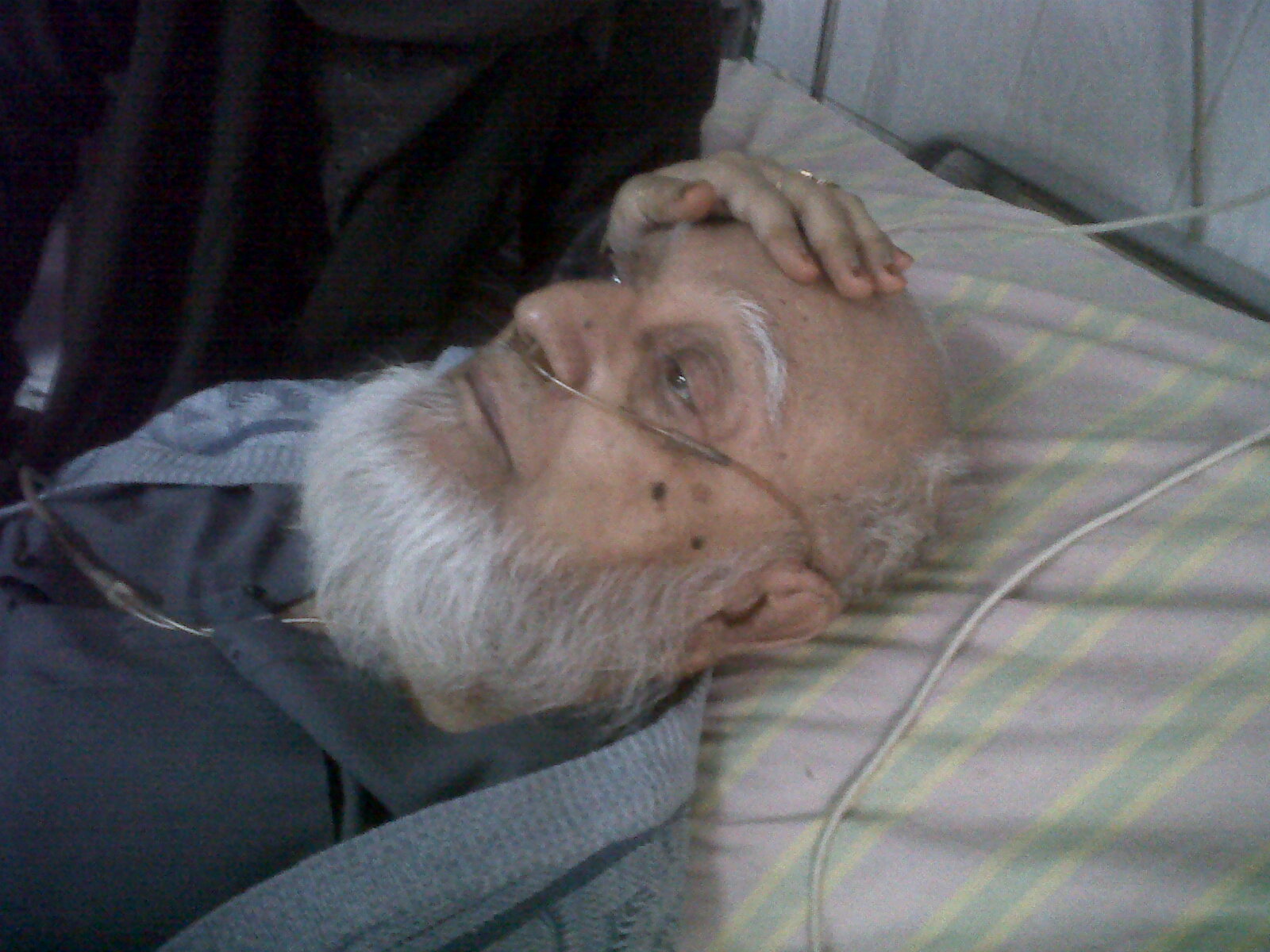
Professor Ghulam Azam was found unconscious in his makeshift prison cell at Bangabandhu hospital today by his son former Brigadier General Amaan Azmi. He was conveyed to the emergency observation room after requests from the family who were extremely concerned that his illness had gone apparently unobserved by the prison wardens. Following initial assessment, further neurological examination was advised however the Jail Superintendent refused to allow this and insisted that Azam was returned to his cell without investigation or treatment. The family were refused permission to see him and were not given any further information about his condition.
As shown in the picture above, he appears to be in an extremely weakened state of health and is clearly not being treated with necessary concern for his health and welfare. This shows the Bangladeshi government’s complete disregard for basic human rights of prisoners, in particular of an elderly and frail man.
A statement (in Bengali) by his wife Afifa Azam can also be found here. Mrs Azam’s Statement _26-11-2012_
Lord Avebury on Abduction of Defence witness
Lord Avebury has published an account of the abduction of Shukho Ranjan Bali on his blog. The blog entry is reproduced below.
On November 5, 2012 at around 10.00, defence witness Shukho Ranjan Bali was abducted from the International Crimes Tribunal premises.
He was coming to testify for the accused Allama Delwar Hossain Sayedee.
As the car taking Bali and the senior defence counsel Mizanul Islam approached the Tribunal, uniformed policemen stopped it for a security check at the entrance. The police said they had instructions not allow anyone except designated lawyers to go inside the Tribunal Room.
As Mizanul Islam was explaining that Bali was a defence witness, a group of plain-clothes men approached the vehicle, grabbed Bali and tried to pull him out of the vehicle. Islam and his associate counsel tried to prevent them and called the uniformed policemen who were silently observing the unfolding event.
At this point one of the plain-clothed men identified himself as member of the ‘Detective Branch’ and said that he had instructions from the ‘higher authority’ to take the witness away. They then removed him from the vehicle and forced him into their car.
Islam’s colleague Shohag Banna asked where they were taking Bali, and was told that it was to the Detective Branch head office at ‘Minto Road, Dhaka’. The uniformed policemen made no attempt to intervene.
Defence counsel believed these plain-clothes men belonged to the ‘Rapid Action Battalion’ an elite security agency, in view of the similarity of the incident to others in which the RAB were known to have been involved.
The Chief Defence Counsel Abdur Razzaq brought this to the notice of the Tribunal, and prayed that the Tribunal should issue directions to the law enforcing agencies to ‘produce’ the defence witness before the Tribunal. The Tribunal merely requested the Chief Prosecutor and Chief of the Investigation Agency to ‘look into the matter’. Defence counsel immediately tried to amend the order of the Tribunal, considering the probability that it was the Investigation Agency and Prosecutor themselves who had ordered the abduction, but the Tribunal refused this application.
Bali was both a victim and eye witness to crimes committed in 1971. He saw his brother Bisha Bali’s murder and arson which destroyed their village.
Mizanul Islam tried to file an official complaint (known as a ‘General Diary’ or GD) with the Shahbagh Police Station on the evening of the incident, November 5, but the police refused to accept it. They also refused to say why they were refusing to accept the GD. a legally obligation.
An urgent application before the High Court Division of the Supreme Court of Bangladesh was filed seeking direction upon the government to produce Bali (Writ of Habeas Corpus under Article 102(2)(b)(i) of the Constitution of Bangladesh) on November 6, 2012 and the Court fixed the hearing date as November 7, 2012. At that hearing the Deputy Attorney General appeared before the court and informed it that the Attorney General himself would appear on behalf of the Government, but not at that time due to personal difficulties. The Court felt obliged to postpone the hearing and fixed November 11, 2012 for the next hearing.
On November 8, 2012, the Chief Prosecutor held a Press Conference at which he alleged that the defence had engaged in ‘False Propaganda’. He claimed that the witness Bali was hiding due to intimidation by the defence team. He further claimed that Bali’s daughter Shukho Ranjan Bali had filed a General Diary with Police confirming that he was being so intimidated. The Prosecutor referred to GD No. 773 filed on February 25, 2012, almost 10 months previously, in the ‘Undur Kani Police Station’, according to the Investigation Officer’s deposition of August 5, 2012.
The Prosecutor did not say why Bali was not able to file the GD himself, nor could he say where either Bali or his daughter were now.
The Tribunal and the police ignored the testimony of the four eye-witnesses to the abduction, Senior Defence Counsel Islam, Senior Defence Counsel Manjul Ansari, Defence Counsel Hasanul Banna Shohag, and the driver of the vehicle Uzzal. No witness statements were taken from the police officers who saw the abduction, and there has been no attempt to find the abducted witness.
Knowing the fate of others who have been abducted by RAB in the past, if Bali has come to any harm, command responsibility will rest on senior law enforcement officials, and on those who were in charge of the Tribunal’s security.
David Bergman has also revived his blog ‘Bangladesh War Crimes Tribunal’ to report on this important event. See http://bangladeshwarcrimes.blogspot.co.uk/2012/11/abduction-of-defense-witness-outside.html
Criticism of ICT by International NGO
International NGO, No Peace Without Justice, calls for removal of death penalty and strict application of due process guarantees at the Bangladesh ICT. The article is reproduced below.
The atrocities committed during the 1971 conflict still haunt Bangladesh and efforts to bring justice are essential for the country to moving forward without the heavy burden of impunity. The hundred of thousands of victims and survivors deserve that justice is done and seen to be done. For the sake of posterity, the International Crimes Tribunal must uphold due process rights and guarantee fair trials. Unless the defence is able to bring witnesses and challenge the prosecution case free from harassment and intimidation and unless the threat of the death penalty is removed from its books, the ICT will have failed the victims and the promise of justice, and it will be rightfully consigned to the annals of history as a politically motivated exercise of vengeance.
No Peace Without Justice (NPWJ) commends the determination of the Government of Bangladesh finally to bring an end to the culture of impunity that has existed for more than 40 years for the massive atrocities committed during the nine-month 1971 conflict, from which Bangladesh emerged as an independent State. As with any conflict, the senseless loss of life and human suffering was experienced on all sides. All those who suffered during the conflict have a right to see justice through an independent and impartial judicial process.
Even after two decades, the call for justice is shared not just by the victims of atrocities, but by the whole of Bangladesh, as a country. The establishment of an International Crimes Tribunal (ICT) was a key promise on the basis of which the BLA-led Grand Alliance received a strong popular mandate and Bangladesh’s commitment to justice was reaffirmed when it became the first South East Asian State Party to the International Criminal Court in 2010.
The ICT, which began its work in March 2010, has an historic mission to close this traumatic chapter and redress the historical burden of atrocities that has accompanied Bangladesh since its birth as a country. It can fulfil this mandate by bringing to justice those who ordered and committed widescale atrocities; providing acknowledgement and redress to countless victims; and creating an undeniable factual record of the events that reflects the real experiences of all affected communities.
The ICT’s obligation and responsibility is, therefore, not just to punish perpetrators who are proved guilty beyond a reasonable doubt, but to provide a fair process that is explained to victims and to the people of Bangladesh, so that they can understand and follow the proceedings and feel that justice is being done. Having expressly excluded any investigations of Pakistani Army officers, who are widely believed to bear the greatest responsibility for the crimes committed, and having focussed its investigations on the current leadership of opposition political parties for their role during the conflict, it is now up to the ICT to demonstrate its ability and willingness to conduct proceedings with fairness, impartiality and strict adherence to due process.
Should the ICT fail to be seen as applying the highest international standards in the enforcement of crimes under international law, even as a domestic tribunal, then it will have failed in its historic mission. Furthermore, such a failure would make it inevitable that a future government will negate all of the tribunal’s achievements and promote revisionist policies that will glorify perpetrators and vilify the victims. In particular, any application of the death penalty for individuals being tried by ICT will virtually guarantee that the process will be viewed by opponents and potential supporters alike as a clumsy attempt to exact political revenge on opposition leadership under the guise of fighting impunity.
The continued exclusion of due process guarantees enshrined in Constitution of Bangladesh as foreseen in the International Crimes (Tribunal) Act 1973 and its 2009 amendment bring discredit to the Tribunal. ICT supporters point out that the provision is needed to address retroactivity concerns (international human rights law specifically allows retroactive jurisdiction for crimes under international law). However, the ICT has since expressly declined application of Bangladesh due process norms in its proceedings, opening itself to further legitimate criticism not only by its opponents, but also by those who should by rights be its most prominent supporters in the international community.
Bangladesh’s failure to address the legitimate concerns of human rights organisations whose mandate is to fight impunity for war crimes, crimes against humanity and genocide, all of whom have voiced strong concerns about the application of due process by the ICT, reinforces the claims of those who are bent on rewriting history to negate the crimes. Even official rulings by United Nations bodies are being ignored: after more than one year, Bangladesh has still not responded to a formal ruling issued on 3 October 2011 by the United Nations Working Group on Arbitrary Detention that ICT pre-trial detention of one BNP and five JEI leaders is “arbitrary” and in breach of article 9 of the Universal Declaration of Human Rights and article 9 of the International Covenant on Civil and Political Rights, to both of which Bangladesh is a party. The worst case scenario, whereby the ICT will have contributed to turning into heroes those it was meant to punish and will have demolished the chance for victims to have durable acknowledgement of their suffering, is already upon us.
To keep the promise of justice for victims that the ICT’s establishment represented, Bangladesh needs immediately and categorically to exclude the death penalty for individuals accused by ICT and apply in full all due process guarantees, including protection of defence witnesses, potential witnesses and counsel from harassment and intimidation; full application of the presumption of innocence; and all other due process rights, to the highest international standards. As trials are ongoing, the ICT can still ensure that these standards are applied and that they are seen to be applied.
No Peace Without Justice urges the Government of Bangladesh and the ICT to assure a real chance for durable justice for the thousands of victims and their families, so that the work of the ICT can sustain the test of time. This includes removing the option of the death penalty and according all due process rights guaranteed under international law and under Bangladeshi Constitution to those accused before it. It is essential that the legislative framework and procedures adopted by the Bangladeshi Government comply with its treaty obligations and ensure that the trial process is conducted in a fair and transparent manner, in order to prevent its proceedings from being easily dismissed by a future government as unjust, widely condemned, politically motivated judicial vengeance.
Finally, No Peace Without Justice calls for the UN Human Rights Council to activate its Special Procedures to conduct an urgent re-assessment of the ICT process, which will provide an opportunity for Bangladesh and the ICT to demonstrate its ability and willingness to conduct fair impartial and independent proceedings.
ICT defence witness kidnapped
It is reported that on the 5th November 2012, a defence witness named Shukho Ranjan Bali was forcibly removed by a group of men as he entered the ICT tribunal premises. One of the men claimed the group was from the ‘detective branch’ and would take the witness to their offices on the instruction of a ‘higher authority’. Although the defence team appealed for help, there was no effort from the uniformed officers present to intervene in the abduction of the witness.
Since this incident, there has been no information about the whereabouts of the witness, which is a matter of deep concern for his family. A writ petition has been filed in the High Court challenging the legality of Ranjan’s detention.
Defence witnesses limited
The examination of prosecution witnesses has now ended, and despite a list of 2,939 witnesses willing to testify in defence of Ghulam Azam, the ICT has limited the number to 12. This clearly undermines the ability of the legal team to provide a robust defence, particularly as 16 witnesses were produced on behalf of the prosecution team. In addition, the tribunal rejected the petition for two expert witnesses for the defence, William Schabas, professor of International Law and Human Rights at Middlesex University and Jack Deverell, a former general with experience in Bosnia. No valid reason was given for this refusal by the court.
There has also been widespread speculation that the trial will be concluded by December 16th, Bangladesh’s ‘Victory Day’, thus providing more evidence that the trial has a foregone conclusion.
Professor Ghula…
Professor Ghulam Azam has shown great fortitude in coping with his current conditions whilst under arrest. He is allowed very little contact with family members, and until recently was not given access to reading or writing material. In addition, he has not been provided with basic amenities such as air conditioning in his prison room, which is leading to unnecessary hardship in the current heat in Dhaka. Family members have been concerned that he has lost weight under these conditions.
Nevertheless, he remained strong during his court appearance last week, calling attention to the actions of Sheikh Mujeeb in forgiving those who had campaigned against the creation of Bangladesh. He also emphasised the political nature of the accusations, highlighting the fact that Jamaat-e-Islami had never been accused of war crimes until after the 2001 elections, once JI had formed a coalition with BNP. He was not allowed to speak for very long before being cut off, however it showed his determination to clear his name.
Please continue to highlight Ghulam Azam’s plight, see ‘How You Can Help’ for more information.
Why detain Ghulam Azam after 40 years?
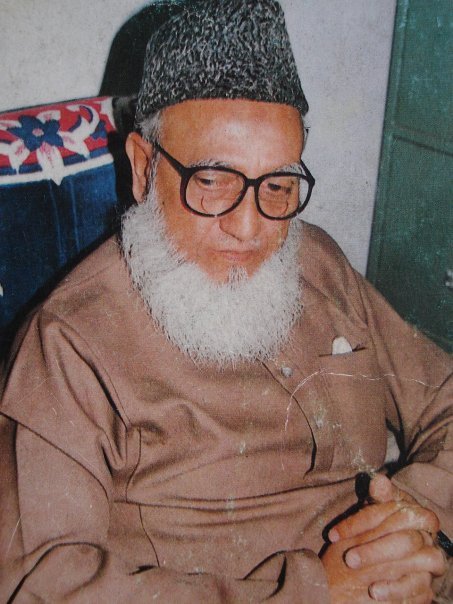
This article first appeared in the Saudi Gazette.
The injustice meted out to Prof. Ghulam Azam, former leader of Jamaat-e-Islami Bangladesh, is unjustifiable on all counts and totally unacceptable. A well-known respectable figure in the Islamic world, Azam is renowned for his piety, righteousness, honesty and trustworthiness. He is now implicated in crimes against humanity that were allegedly committed 40 years ago. This is not only surprising and astounding but also highly condemnable. How can anybody justify detaining a 90-year-old man who retired from politics more than 10 years ago, throwing him into an isolated prison cell and putting restrictions on who can visit him?
Ghulam Azam was the leader of Jamaat-e-Islami in East Pakistan. It is well known that Pakistan Jamaat-e-Islami, headed by Abul Ala Maududi, the founder of Jamaat-e-Islami, was always with the opposition, and therefore, its leaders, including Azam, were detained several times during the time when Pakistan was united.
When the political crisis erupted in Pakistan after the 1970 general elections, the military ruler Yahya Khan announced the postponement of convening the National Assembly and that resulted in civil disobedience being declared by the Awami League, which scored a sweeping victory in East Pakistan in the elections. These developments followed a military crackdown on protesters and a series of political detentions, and that resulted in a nine-month-long civil war, which ended with India’s military intervention that was decisive for the establishment of the independent state of Bangladesh in place of East Pakistan.
Ghulam Azam took a political stance in support of a unified Pakistan and vehemently opposed division of the country. He was also against the atrocities perpetrated by the Pakistan army in East Pakistan. When the war with India broke out, Ghulam Azam was in West Pakistan.
After the defeat of the Pakistan army in the war and its surrender to Indian troops, Sheikh Mujibur Rahman was released from jail and returned to Dhaka to take over the leadership of the new independent state. He promulgated a war crime law, and as per the law, 195 people were charged with war crimes. All of them belonged to the Pakistan army and they included no Bengali civilians. Then, Mujibur Rahman issued a general amnesty for all of them saying: “I want to show that Bengalis know how to forgive.”
Regarding the war crimes of Bengali civilians, the new government enacted a law to punish those who extended support to the Pakistan army. Subsequently, more than 100,000 civilians were arrested. None of these people remain under detention with charges of committing crimes against humanity. All of them, except for 752, were released following a general amnesty announced by Sheikh Mujibur Rahman. Of the 752 people, none were political figures.
But now, after 40 years, a number of prominent figures – all of them leaders of the Jamaat-e-Islami Bangladesh, including Ghulam Azam – have been detained. This move has elicited massive condemnation from international human rights organizations as well as from eminent lawyers from a large number of Western countries.
Ghulam Azam has been a victim of political vendetta several times. In 1993, he was detained for 16 months by the Bangladesh Nationalist Party government. Later, he was released after the Bangladesh Supreme Court pronounced the following unanimous verdict: “There is nothing to directly implicate the petitioner Ghulam Azam in any of the atrocities alleged to have been perpetrated by the Pakistani army or their associates – the Rajakars, Al-Badr or Al-Shams. Except that the petitioner was hobnobbing with the military junta during the war of liberation, we do not find that the petitioner was in anyway directly involved in perpetuating the alleged atrocities during the war of independence.”
But now this issue has once again been raised after 40 years during which time there were no criminal cases registered against any of those who remain under detention. This was the situation during the periods of the successive governments, including the incumbent Awami League government, which ruled the country from 1996 to 2002. No one was implicated in any crimes against humanity. What then is the justification for the detention of such a respectable figure as Ghulam Azam after a gap of 40 years?
— Dr. Ali Alghamdy is a former Saudi diplomat who specializes in Southeast Asian affairs. He can be reached at algham@hotmail.com __
 Professor Ghulam Azam